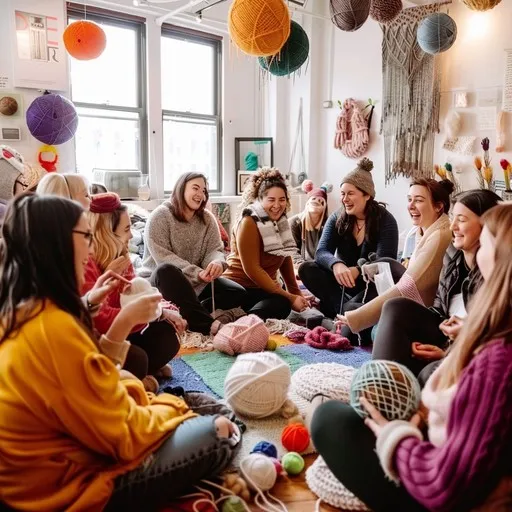
One Project Was All It Took: The Makes That Turned Curious Beginners Into Lifelong Makers

Photo: Army Specialist Fourth Class Dennis Kurpius, Public domain, via Wikimedia Commons
Ask any experienced crafter about their origin story, and you'll rarely hear about years of practice. You'll hear about one project.
A lumpy first sock. A baby blanket made in a panic before a niece arrived. A dishcloth that somehow took three weeks. These aren't just memories — they're turning points, the moment a curious dabbler quietly became a maker for life.
We asked makers across the country about the project that changed everything for them. Their answers were surprisingly consistent, and they reveal a lot about how craft becomes a habit.
The Sock That Started It All
Marlene, 54, from Columbus, Ohio, had tried knitting twice before and quit both times. Then her sister-in-law suggested socks.
"I remember turning the heel," she told us. "Everyone says it feels like magic, and it genuinely does. I held up this tiny 3D fabric object and thought, I made architecture. I've knitted maybe forty pairs since."
There's a pattern here. The projects that hook people tend to share a few traits:
- A visible transformation. Flat fabric becomes a three-dimensional object — a heel, a hat crown, a mitered corner. Your brain registers the shift as proof of skill.
- A finish line you can actually see. A sock takes weeks, not months. Small wins build momentum.
- A real-world stake. Making something for a specific person, or something you'll genuinely wear, raises the emotional payoff.
Why Small Projects Build Big Habits
Psychologists who study habit formation talk a lot about "quick wins" — early successes that make a behavior feel rewarding enough to repeat. Craft is no different. The makers we spoke to almost universally started with something small: a dishcloth, a hat, a simple scarf in chunky yarn.
What they didn't start with was a king-size afghan in fingering weight.
"I see it all the time at the shop," says a yarn store owner in Asheville. "Somebody comes in wanting to knit a sweater as their very first project. I gently steer them toward a hat. Nine times out of ten, they're back in two weeks picking sweater yarn."
The Stories Makers Told Us
The emergency baby blanket. Dana from Portland had a crochet hook for exactly one week before her best friend's shower. "Nothing motivates like a deadline and a registry. That blanket was ugly. It was also the moment I became a crocheter."
The pandemic sweater. Marcus from Chicago lost his commute in 2020 and needed something to do with his hands. "I followed a YouTube tutorial line by line. When it fit, I wore it to every video call I could. My coworkers got sick of it. I didn't care."
The dishcloth that wasn't about the dishcloth. "Honestly, the project barely mattered," says Priya from Austin. "What mattered was that twenty minutes at night stopped my brain from spiraling. The cloth was an excuse. The calm was the product."
That last one might be the most common gateway of all — people come for the project and stay for the peace.
Choosing Your Own Gateway Project
If you're new — or you've bounced off craft before — here's how to pick a project with staying power:
- Pick something you'll use. A hat you'll actually wear beats a wall hanging that lives in a drawer.
- Go thick. Bulky and super bulky yarns work up fast, and fast is addictive when you're starting out.
- Keep it under three weeks. Long enough to learn something, short enough to finish before life interferes.
- Add one new skill. A project that teaches you a single trick — like working in the round or a simple decrease — leaves you feeling smarter, not defeated.
- Make it for someone. A gift, even a modest one, doubles the payoff.
Good candidates: a chunky beanie, a granny-square bag, a ribbed scarf, a pair of simple mittens, or yes — a sock, if you're feeling brave.
The Moment It Clicks
Ask lifelong makers when they knew, and they'll describe something almost identical: the first time they looked at a mistake and knew how to fix it. Not when the project was finished — when they stopped feeling like a guest in the craft and started feeling like they belonged.
That moment is out there for you too. It might be one project away.
So pick something small. Pick something you'll use. And when that first finished object comes off the needles or hook, don't be surprised if you're already planning the second.