Hooked on Handmade: Why Younger Americans Are Swapping Scrolling for Stitching
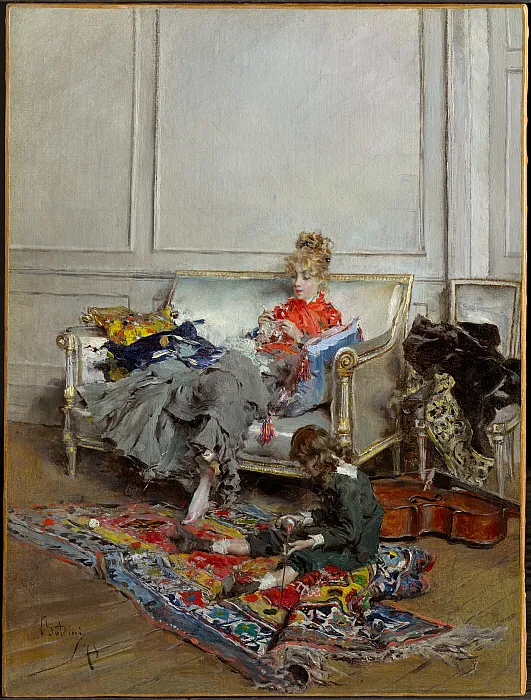
Photo: Giovanni Boldini, Public domain, via Wikimedia Commons
Scroll through TikTok on any given evening and you'll find them: twenty-somethings with ring lights and yarn bowls, narrating their crochet WIPs (works in progress, for the uninitiated) to audiences of tens of thousands. Hashtags like #CrochetTok and #KnittingCommunity have racked up billions of views. On Instagram, cottagecore aesthetics and handmade sweater selfies dominate certain corners of the feed in a way that feels less like nostalgia and more like a full-on cultural movement.
Something real is happening here. Gen Z and Millennials — generations raised on smartphones and streaming services — are reaching for fiber arts in numbers that would have seemed unlikely just a decade ago. And the reasons why say a lot about where we are as a culture right now.
The Paradox of Going Analog on a Digital Platform
It seems contradictory at first glance: using Instagram to celebrate unplugging, or filming a TikTok about the meditative peace of hand-knitting. But the paradox actually makes perfect sense once you look at it closely.
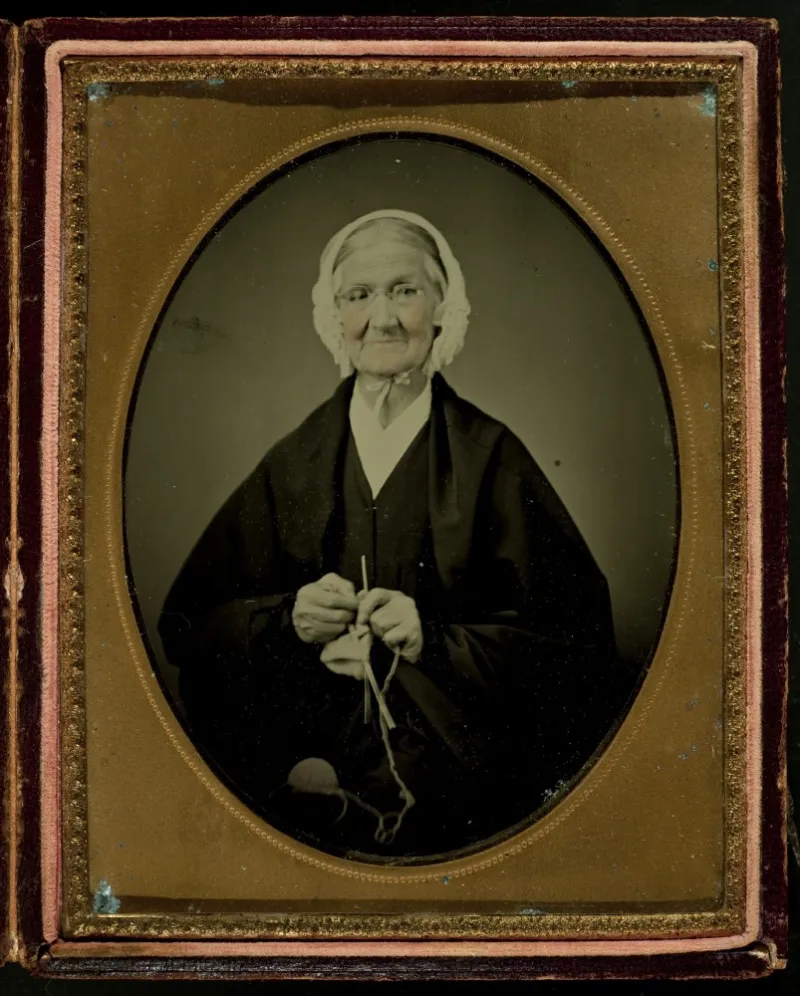
Social platforms gave fiber arts something they'd been quietly missing for a generation: visibility. When your grandmother crocheted, she likely did it in relative isolation — maybe in a church group or a small local guild. Today, a 22-year-old in Des Moines can post a video of her first granny square attempt and get flooded with encouragement from makers in Portland, Atlanta, and rural Vermont within hours. That sense of instant community is enormously powerful, and it's driving new crafters into the fold at a pace the traditional craft world never anticipated.
The platforms also democratized learning. YouTube tutorials and Instagram step-by-steps have replaced the need for expensive in-person classes or access to a knowledgeable family member. If you want to learn Tunisian crochet or rigid heddle weaving at midnight in your apartment, there's a free video for that.
It's Not Just a Hobby — It's a Mental Health Practice
Ask anyone who's recently picked up a crochet hook why they started, and "stress" comes up a lot. The repetitive, rhythmic nature of fiber arts has a well-documented calming effect — the focus required to count stitches pulls your brain out of the anxiety spiral and into something concrete and manageable. You're making something real with your hands, in real time. That's increasingly rare in a world where most of our work and socializing happens through a screen.
For Millennials who came of age during the 2008 recession and entered their peak earning years during a pandemic, and for Gen Z who've never known a world without climate anxiety and social media pressure, the appeal of something slow, tactile, and completely within their control is hard to overstate.
There's also something quietly radical about making things by hand in a culture that defaults to buying everything. Knitting your own sweater, weaving your own wall hanging, or crocheting a tote bag is a small but meaningful act of self-sufficiency. It feels good in a way that's hard to articulate but easy to understand.
Subcultures Are Springing Up Around the Craft
The fiber arts revival isn't monolithic — it's a cluster of overlapping subcultures, each with its own aesthetic and community vibe. There's the cottagecore crowd, drawn to soft earth tones and pastoral imagery. There's the maximalist "goblincore" knitter who works in chaotic color combinations and celebrates imperfection. There are the sustainability-focused crafters sourcing ethically produced wool and natural dyes. And there are the hyperpop-adjacent crocheters making brightly colored, intentionally weird sculptural pieces that look more like contemporary art than anything your grandmother made.
What's remarkable is that all of these subcultures are talking to each other — trading techniques, collaborating on projects, hyping each other's shops. The fiber arts community online tends to be genuinely welcoming, which stands out in an internet landscape that often isn't.
The "Handmade Aesthetic" Has Cultural Currency
Handmade has become desirable in a way it simply wasn't twenty years ago, when mass-produced uniformity was the aspiration. Today, a slightly uneven texture or a visible seam can actually add value. The visible evidence of human effort — what craft writers sometimes call the "hand" of a piece — signals authenticity in a world saturated with algorithmic sameness.
This shift is showing up in fashion, home décor, and gift-giving. A hand-knitted gift carries emotional weight that a store-bought equivalent can't match. Younger consumers understand this intuitively, and many are motivated to learn fiber arts specifically so they can give something genuinely personal.
Where This Is All Heading
The fiber arts revival doesn't look like it's slowing down. Craft supply sales have climbed steadily over the past several years, and community groups — both online and in-person — continue to grow. Local yarn stores that pivoted to host beginner workshops have seen a surge in younger customers who discovered the craft online and wanted to connect face-to-face.
What's especially exciting is what this generation is doing with traditional techniques. They're not just replicating patterns from the past — they're remixing them, pushing into new materials, new color palettes, and new forms. The result is a craft culture that honors its roots while growing into something entirely its own.
And honestly? That's exactly what good craft has always done.