Stitch Break: The Quiet Revolution of Crafting at Work
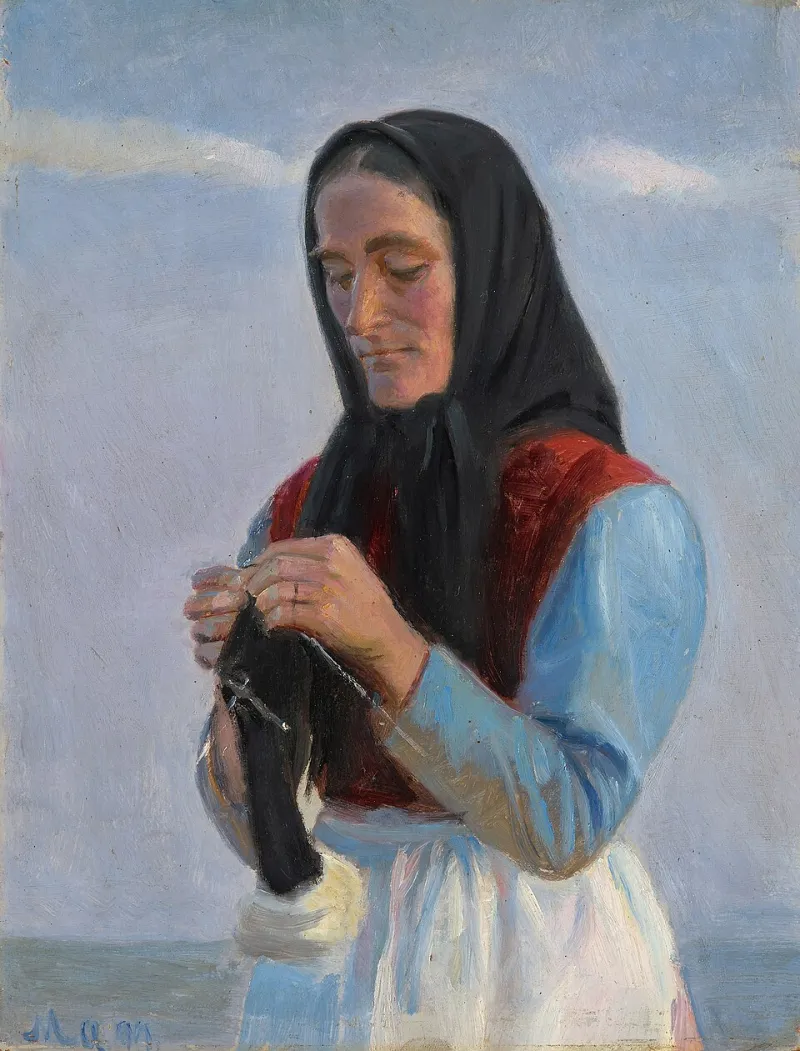
Photo: Michael Ancher, Public domain, via Wikimedia Commons
Somewhere between the third video call of the morning and a lunch eaten in front of a laptop, something shifted for Maya, a 34-year-old marketing manager in Chicago. She started keeping a small knitting project in her desk drawer. Nothing fancy—just a simple ribbed scarf in a deep burgundy that she could pick up for ten minutes between tasks. "People thought it was weird at first," she laughs. "Then three coworkers asked me to teach them."
Maya's experience isn't unusual anymore. Across the country, professionals are quietly threading creativity into their workdays, and the trend is growing fast enough that employers are starting to pay attention.
The Digital Burnout Nobody Wants to Admit
Let's be honest: most office jobs—whether you're commuting into a downtown high-rise or logging on from a spare bedroom—are relentlessly screen-based. The average American knowledge worker spends more than seven hours a day staring at a monitor. That kind of sustained digital engagement takes a real toll on the nervous system, and people are looking for relief that doesn't involve another app.
Enter fiber arts.
Therapists who work with stressed professionals have started noticing a pattern. "There's something about working with your hands that the brain responds to differently than any screen-based activity," says one occupational therapist based in Austin, Texas, who asked to remain anonymous because she was speaking informally. "Crafting activates a different mode of attention—softer, more rhythmic. It genuinely gives the prefrontal cortex a break without shutting down engagement entirely."
That "soft focus" quality is part of what makes knitting or crochet uniquely suited to the workplace. Unlike, say, watercolor painting or woodworking, fiber arts are quiet, portable, and don't require a dedicated mess. A skein of Red Heart Super Saver and a crochet hook can live in a tote bag for months without anyone noticing.
Companies Are Actually Starting to Get It
Forward-thinking employers are beginning to recognize crafting not as a quirky distraction but as a legitimate wellness tool. A handful of tech companies on the West Coast have added craft rooms to their office amenity lists—spaces stocked with yarn, needles, and basic supplies where employees can decompress. It's the same logic behind meditation rooms and nap pods, but with a tangible, productive output at the end.
For remote workers, the integration looks different but feels just as intentional. Sarah, a 41-year-old UX designer who works from home in Denver, schedules what she calls a "craft block" into her calendar every afternoon from 3 to 3:30. "I treat it like a meeting I can't skip," she says. "I come back to my desk afterward and I'm genuinely sharper. It resets something."
Some companies are going further by organizing voluntary craft clubs as part of their team-building programming. An HR coordinator at a mid-sized financial firm in Atlanta described launching a monthly lunchtime knitting circle after noticing that employees who attended had measurably better scores on internal wellness surveys. "We didn't expect it to catch on the way it did," she says. "Now we have 22 regulars."
The Desk Drawer Starter Kit
You don't need corporate buy-in to start sneaking some creativity into your nine-to-five. Here's how to build a discreet, portable craft setup that fits into even the most buttoned-up office environment.
Keep it small and contained. A single ongoing project—a hat, a dishcloth, a simple granny square—is all you need. Choose a project that doesn't require constant pattern-checking so you can put it down and pick it up without losing your place.
Pick the right yarn. Lightweight, smooth yarns like Red Heart Soft or Aunt Lydia's Classic Crochet Thread are ideal for office environments. They're quiet, they don't shed, and they pack down small. Avoid anything fuzzy or heavily textured if you're working at a shared desk.
Invest in a good project bag. A zippered pouch or compact tote keeps everything together and signals to coworkers that this is an organized activity, not a mess in the making. Bonus: it doubles as a conversation starter.
Use your real breaks. Ten minutes of crafting during a genuine lunch break or afternoon rest period is genuinely restorative. You're not trying to crochet through a budget meeting—you're giving yourself permission to step away from the screen in a meaningful way.
Go digital-free during craft time. The whole point is to let your mind rest from screens. Put your phone face-down and let the rhythm of the stitches do its thing.
How to Start a Workplace Craft Community
If you want to take it further, building a small craft community at work is easier than you might think. You don't need a formal proposal or a budget line item to get started.
Begin by simply being visible about your own practice. Leave a project on your desk. Mention it casually. You'll be surprised how quickly people express curiosity or admit they used to crochet in college and never picked it back up.
From there, suggest an informal gathering—a lunch, a coffee break, a fifteen-minute Friday wind-down. Keep the vibe low-pressure and beginner-friendly. Not everyone needs to be making something; some people just want to sit in the same room as someone who is.
If you want to formalize it, most HR departments are receptive to wellness-adjacent proposals, especially when you frame crafting in terms of stress reduction and team cohesion. Come with data (there's plenty of research on the mental health benefits of repetitive hand crafts), a simple supply list, and a proposed schedule. You might be surprised how quickly it gets a green light.
The Bigger Picture
What's happening in offices across America isn't just a quirky lifestyle trend. It's a response to something real—a collective hunger for tangible work in a world that has become almost entirely abstract. When your job produces nothing you can hold in your hands, there's something deeply satisfying about finishing even a small, imperfect square of crochet and setting it on your desk.
Maya finished her burgundy scarf in January. She's already started a second one, this time in a soft teal. Three of her coworkers now keep projects in their own desk drawers. "It's become this weird little thing we have in common," she says. "Nobody talks about it much. We just all know it's there."
Sometimes that's exactly enough.