They're Actually Asking: How Gen Z Is Turning to Family to Learn the Crafts We Almost Forgot to Teach
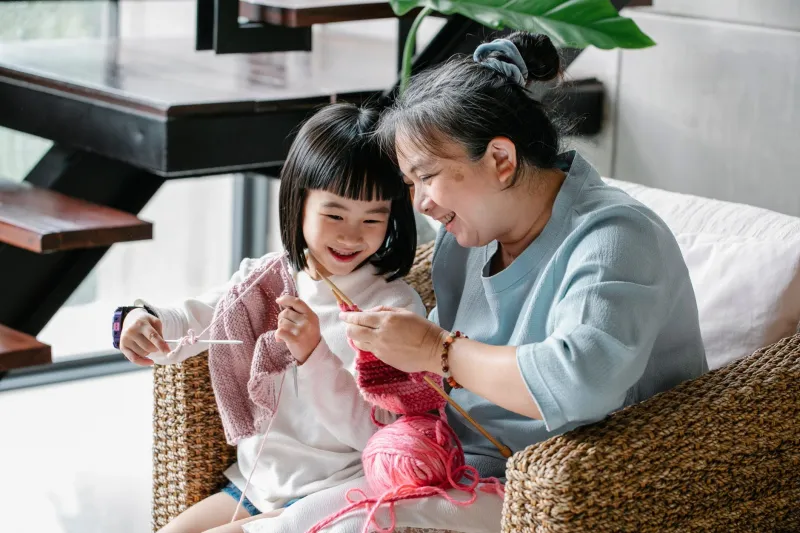
For years, the story went one way: an older relative tries to get a teenager interested in knitting or crochet, the teenager politely declines, and the yarn stays in the basket. But lately, that script has flipped — and it's catching a lot of crafters completely off guard.
Across the country, Gen Z kids are the ones initiating the conversation. They're the ones asking grandma to show them how to cast on. They're texting their moms mid-semester to ask which crochet hook size to buy. They're showing up to the craft room with genuine curiosity, not polite obligation. And for the crafters who've been quietly keeping these skills alive, it feels like something close to a miracle.
So what's actually going on here?
The Screen Fatigue Factor
It probably won't surprise anyone that a generation raised on smartphones and social media is starting to crave something more tangible. There's a growing awareness among younger Americans — especially those in their late teens and early twenties — that digital life, for all its convenience, doesn't always leave you with something you can hold in your hands at the end of the day.
Fiber arts offer the opposite of that. When you finish a hat or a dishcloth or even just a swatch, you've made something real. Something that exists in the physical world. For a generation that's spent a significant chunk of its life staring at screens, that kind of concrete, tactile accomplishment hits differently.
But screen fatigue is only part of the picture.
TikTok Taught Them to Want This
Here's the irony: social media is also a big reason why younger people are suddenly interested in traditional crafts. Fiber arts content has absolutely exploded on TikTok and Instagram over the past few years. Crochet tutorials rack up millions of views. "Slow living" aesthetics featuring yarn baskets and handmade blankets flood Pinterest boards. There's an entire corner of the internet dedicated to the satisfying rhythm of needles clicking and hooks catching loops.
For a lot of Gen Z, that content sparked genuine curiosity — but it also highlighted a gap. Watching someone else knit on a screen is one thing. Actually knowing how to do it yourself is another. And when they realized that the people most likely to teach them were sitting right there in the family home, something clicked.
Suddenly, grandma's skill set looked a lot more valuable than it did before.
What Families Are Actually Experiencing
Talk to crafters who've recently taken on a teenage or young adult student in their own family, and you'll hear a lot of the same things. Surprise, first of all. Then delight. Then a kind of quiet pride that's hard to put into words.
Many describe the experience as unexpectedly emotional — sitting down with a grandchild or a teenager to pass on something they'd learned decades ago, never quite knowing if anyone would want it. The patience required goes both ways, too. Learning a new physical skill is humbling at any age, and younger learners often need to recalibrate their expectations. Things that look easy on a tutorial video turn out to require real repetition and muscle memory.
But families also report that the process of learning together creates a kind of closeness that's hard to manufacture any other way. You're not just passing down a technique — you're sharing time, conversation, and a whole lot of "wait, do that part again" moments that turn into inside jokes and lasting memories.
Why This Generation Is Actually a Great Student
Here's something that might surprise you: Gen Z learners often bring real advantages to the craft table. They're resourceful. They're used to learning from video content, which means they can supplement in-person lessons with online tutorials without getting confused. They're also genuinely comfortable with imperfection in a way that might catch older crafters off guard — many of them have grown up watching "making" culture online, where the process is celebrated as much as the finished product.
They're also motivated in a different way than reluctant learners. When someone asks to be taught, they tend to stick with it. The investment is different when the curiosity is self-generated.
How to Make the Most of It When They Come to You
If you've got a younger person in your life who's suddenly interested in learning what you know, here are a few things that can make the experience better for both of you.
Start with a project they actually want to make. Don't begin with a practice swatch if you can help it. Ask them what they'd like to create — a phone case, a beanie, a simple tote bag — and build the foundational skills around that goal. Motivation stays high when there's a real endpoint in sight.
Keep the first sessions short. An hour is plenty, especially early on. Fiber arts require hand coordination that takes time to develop, and fatigue sets in faster than most beginners expect. Ending on a positive note beats pushing through frustration every single time.
Let them take photos and videos. This isn't distraction — it's how they learn and how they'll remember what you showed them. Encourage it. They'll also share what they're making, which brings more people into the craft community, which is genuinely good for all of us.
Don't correct every mistake immediately. Some errors are learning opportunities best discovered naturally. If they're not going to affect the overall project, let them ride. The goal is to build confidence alongside skill.
Share the stories, not just the steps. Where did you learn this? Who taught you? What's the first thing you ever made? These details are what transform a skill transfer into something that actually sticks across generations. The technique is the vehicle — the story is what makes it meaningful.
The Bigger Picture
There's something worth sitting with in all of this. For generations, there's been a cultural narrative that traditional crafts were fading — that younger people just weren't interested, that these skills would slowly disappear as the people who held them aged out. That narrative is looking a lot less certain right now.
Gen Z is actively seeking out the knowledge that older generations assumed would be left behind. They're doing it on their own terms, for their own reasons, but they're doing it. And the crafters who've kept these skills alive through decades of being told their hobby was old-fashioned are suddenly finding themselves with something genuinely valuable to offer.
If someone young in your life has expressed interest in learning what you know, take it seriously. Clear an afternoon. Pull out the good yarn. Sit down together.
What you have to teach them is worth more than you probably realize — and they already know it.